
Team Building & Communication Training
By understanding how team members naturally communicate, collaborate, and respond to pressure, organizations can reduce friction, improve trust, and build stronger working relationships.
Most team challenges aren’t caused by a lack of effort or skill—they’re caused by miscommunication, unmet expectations, and different behavioral styles colliding under pressure. DISC helps teams understand how and why people interact the way they do, creating clarity where assumptions often lead to conflict.
Rather than focusing on personalities or preferences, DISC provides a practical framework for understanding communication styles, decision-making approaches, and stress responses. This shared language helps teams move beyond misunderstanding and toward more productive, respectful collaboration.
Why Use DISC for Team Building & Communication
DISC gives teams a common reference point for understanding behavior—without blame, labels, or hierarchy. Instead of asking “Who’s right?” teams learn to ask “What style is at play here?”
White Label DISC is designed to support facilitated workshops, communication training, and ongoing team development. Whether you’re working with intact teams, cross-functional groups, or leadership cohorts, DISC helps surface differences early and turn them into strengths rather than obstacles.
Clarity and Communication Start With Understanding
DISC helps team members recognize how their communication style impacts others—especially in moments of pressure, urgency, or conflict.
By understanding behavioral differences, teams can adjust communication styles to reduce friction, anticipate stress responses before they escalate, and improve collaboration across roles and departments.
Instead of reactive conversations, teams gain proactive awareness—leading to clearer expectations, faster alignment, and healthier working dynamics.
A Common Language for Better Communication
One of the biggest challenges in team communication is that people describe behavior differently—or not at all. DISC gives teams a shared, neutral language to talk about communication, expectations, and stress responses without personalizing conflict.
Instead of vague feedback like “they’re hard to work with” or “they don’t communicate well,” teams can clearly identify behavioral patterns and adapt accordingly. This shared understanding reduces misinterpretation, improves trust, and makes conversations more productive—especially when stakes are high.
When teams speak the same behavioral language, alignment happens faster and collaboration becomes more intentional.
DISC Built for Scalable Team Training Programs
White Label DISC centralizes assessments, results, and reports in a single platform—designed to support workshops, training programs, and repeat engagement.
Team-Level DISC Insights
Understand how individual styles interact within a group.
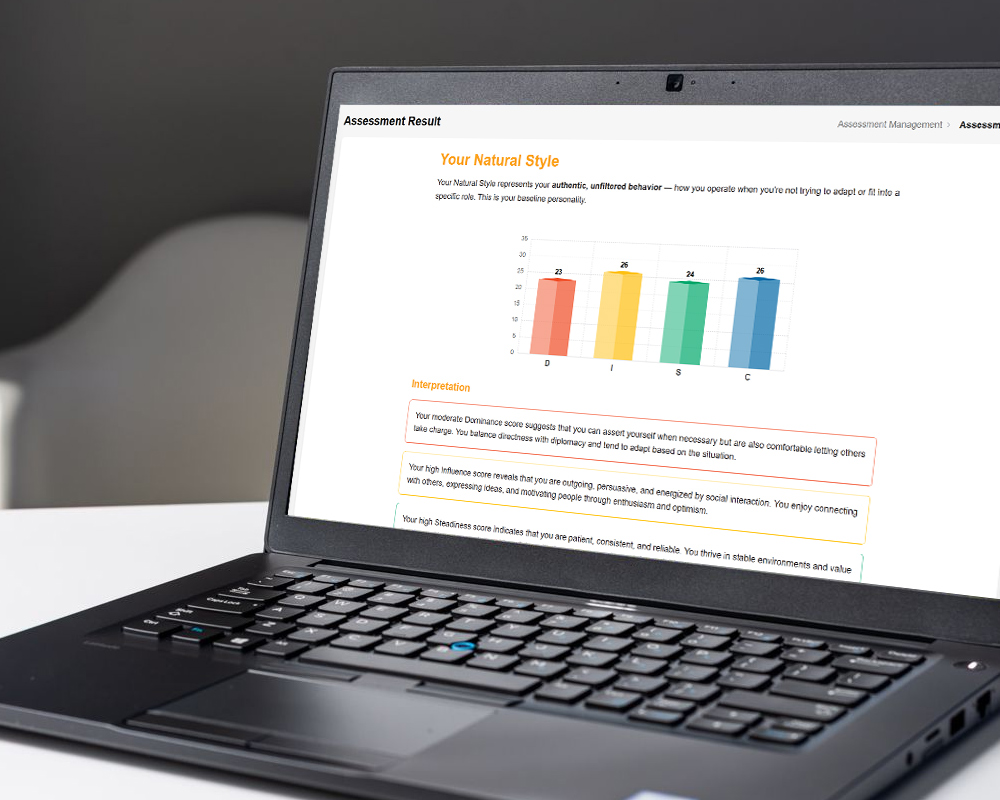
Clear Visual DISC Charts
Easy-to-understand visuals that support group discussions and facilitation.
Designed to Reduce Fatigue
Thoughtful pacing keeps participants engaged during workshops and sessions.
High-Accuracy Scoring
Reliable results teams can trust and facilitators can confidently interpret.
16 DISC Style Combinations
Blended, easy to understand styles that reflect real-world team dynamics.
Actionable, Real-World Insight
Practical guidance teams can apply immediately to improve communication.
Articles on Team Building
Ready to start building stronger teams with DISC?
No setup or annual fees. Cancel anytime.
DISC for team building & communication training FAQ
-
Can DISC be used in live workshops or facilitated sessions?
Yes. DISC is ideal for workshops, retreats, onboarding sessions, and communication training.
-
Can teams view individual and group results?
Yes. Results can be shared individually, discussed in groups, or reviewed by facilitators as needed.
-
Does DISC work for cross-functional or remote teams?
Absolutely. DISC is especially effective for teams with diverse roles, communication styles, or work environments.
-
Is DISC suitable for ongoing team development?
Yes. Many organizations use DISC as a recurring tool to reinforce communication and alignment over time.